
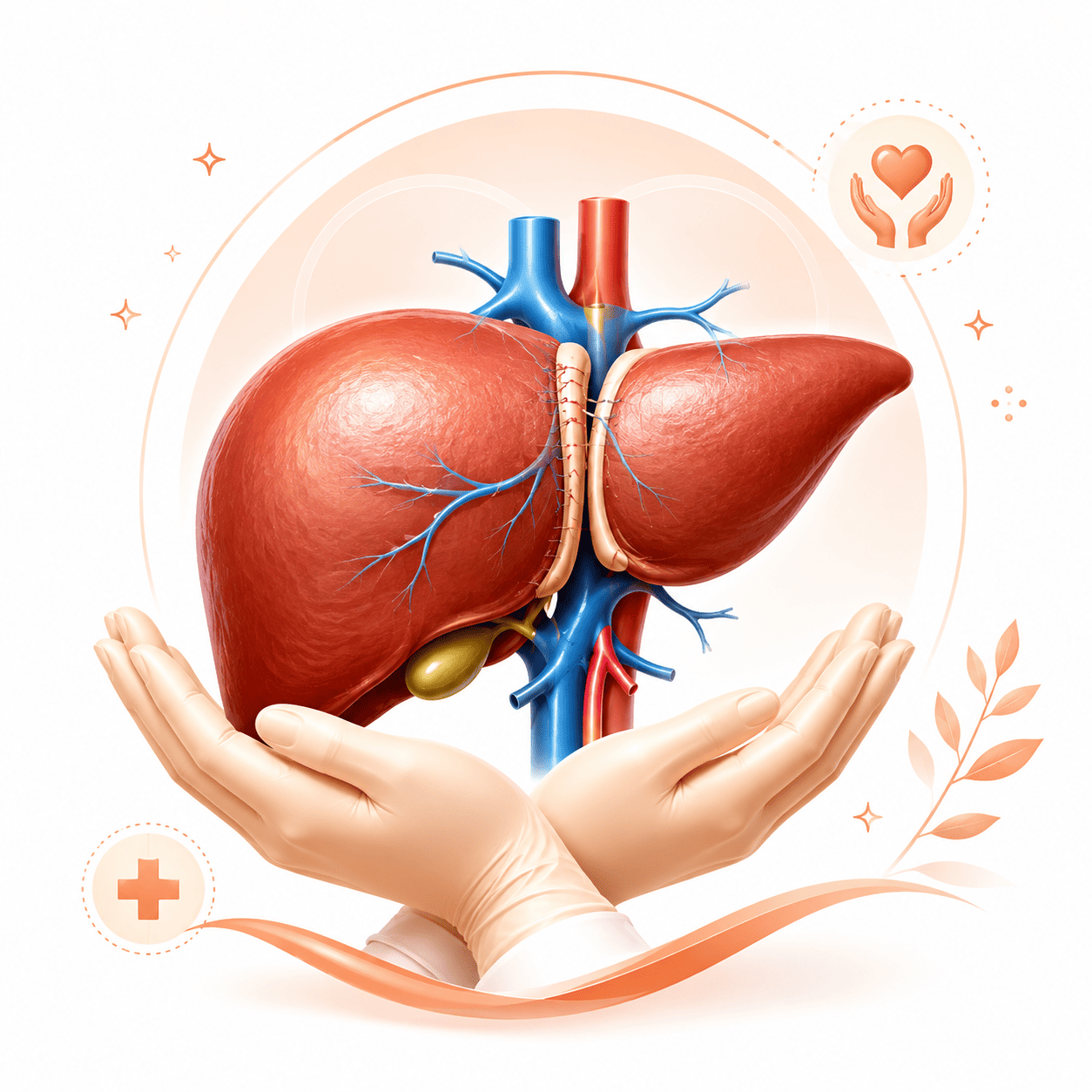
Liver Transplant
Liver transplantation replaces a severely diseased or failing liver with a healthy donor liver or a suitable portion of a donor liver. It can be a life-saving treatment for selected patients with end-stage liver disease, acute liver failure, or certain liver cancers.
Need help in choosing the right package for your medical trip?
Chat to our experts nowYour health data is protected with us
Why Choose us?
Value
Focused care
0+
Organ Transplant Doctors
1+
Liver Transplant
3+
Hospitals Around the world
100%
Privacy protected
Overview
1. What is a Liver Transplant?
Liver transplantation is a major surgical procedure in which a diseased liver is replaced with a healthy liver from a suitable donor. In living-donor transplantation, a portion of the donor's liver is transplanted.
2. When is Liver Transplantation recommended?
It may be considered for end-stage chronic liver disease, decompensated cirrhosis, acute liver failure, selected metabolic liver disorders, and certain patients with liver cancer or other serious liver conditions.
3. What are the main types of Liver Transplantation?
The main approaches are living-donor liver transplantation and deceased-donor liver transplantation. In living-donor transplantation, a suitable portion of the donor's liver is removed and transplanted into the recipient.
4. Who can be a living liver donor?
A potential donor must undergo extensive medical and psychosocial evaluation. Blood-group compatibility, liver anatomy and volume, general health, and suitability under applicable laws and transplant regulations are assessed before donation.
5. What tests are required before transplantation?
Both donor and recipient undergo extensive evaluation, which may include blood tests, liver-function assessment, viral screening, CT/MRI imaging, cardiac evaluation, liver-volume and vascular assessment, and other tests required by the transplant programme.
6. How is Liver Transplant Surgery performed?
The recipient's diseased liver is removed and replaced with the donor liver or donor liver segment. The transplant team connects the major blood vessels and bile duct to establish blood flow and bile drainage.
7. What is recovery like after Liver Transplantation?
Recipients generally require close monitoring in an ICU initially, followed by hospital recovery and long-term outpatient follow-up. Recovery varies according to the patient's condition before transplantation and any postoperative complications.
8. What are the possible risks?
Potential complications include bleeding, infection, blood clots, bile-duct complications, vascular problems, graft dysfunction or rejection, kidney problems, and complications related to immunosuppressive medications.
9. Why consider India for Liver Transplantation?
India has experienced multidisciplinary liver-transplant teams, advanced hepatology and transplant surgery facilities, modern ICUs, and established living-donor transplant programmes, with treatment costs that can be comparatively lower than in many countries.
10. How can Medavelle help?
Medavelle can coordinate evaluation with an experienced liver-transplant centre, arrange review of donor and recipient medical records, facilitate transplant-team assessment and cost estimation, and assist with hospital, travel, and treatment coordination in India.
Top Organ Transplant Hospitals
World-class healthcare facilities specializing in Liver Transplant with state-of-the-art technology



Expert Doctors for Liver Transplant
Board-certified specialists with experience in organ transplant treatment planning
