
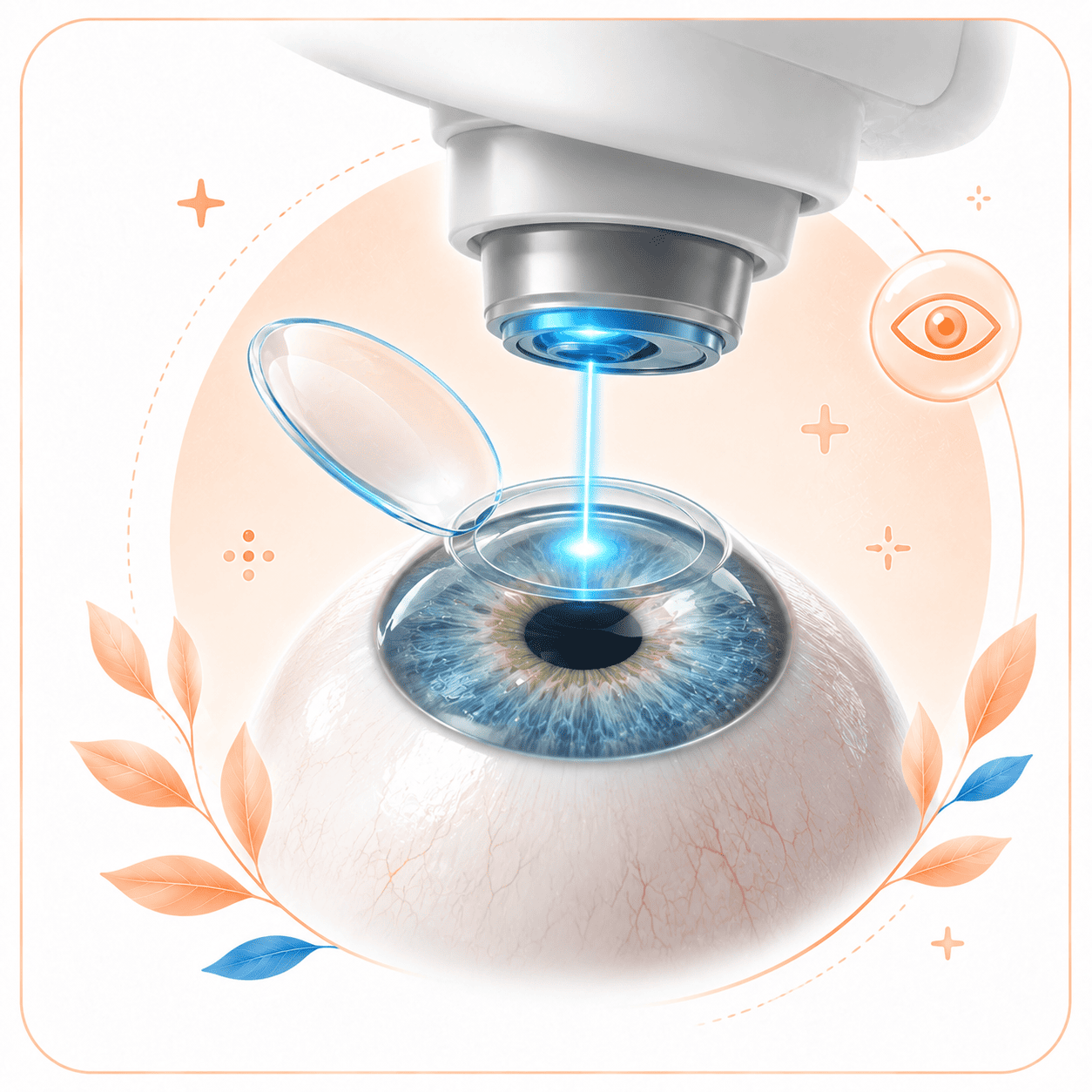
LASIK Surgery
LASIK is an advanced laser vision-correction procedure that reshapes the cornea to correct refractive errors and reduce dependence on glasses or contact lenses.
Need help in choosing the right package for your medical trip?
Chat to our experts nowYour health data is protected with us
Why Choose us?
Value
Focused care
0+
Ophthalmology Doctors
1+
LASIK Surgery
3+
Hospitals Around the world
100%
Privacy protected
Overview
1. What is LASIK Surgery?
LASIK (Laser-Assisted In Situ Keratomileusis) is a laser refractive procedure used to correct common vision problems by reshaping the cornea so that light focuses more accurately on the retina.
It may be used to correct:
- Myopia (short-sightedness)
- Hyperopia (long-sightedness)
- Astigmatism
2. When is LASIK Surgery Recommended?
LASIK may be considered for suitable patients who have:
- A stable spectacle prescription
- Appropriate corneal thickness and shape
- Healthy eyes
- Suitable refractive error
- Realistic expectations regarding outcomes
A detailed ophthalmological examination is required because not everyone is suitable for LASIK.
3. What Types of LASIK Procedures Are Available?
Depending on the patient's eyes and available technology, options may include:
- Conventional LASIK
- Femto-LASIK
- Wavefront-guided LASIK
- Topography-guided LASIK
- Other customised LASIK approaches
The ophthalmologist recommends the most suitable technique after detailed eye testing.
4. What Does the LASIK Procedure Involve?
The general treatment process includes:
Comprehensive eye examination → Corneal mapping → Suitability assessment → LASIK planning → Numbing eye drops → Corneal flap creation → Laser corneal reshaping → Flap repositioning → Postoperative monitoring
The procedure is usually performed on an outpatient basis.
5. What Tests Are Performed Before LASIK?
Preoperative assessment may include:
- Vision and refraction testing
- Corneal topography or tomography
- Corneal thickness measurement
- Eye pressure measurement
- Tear-film and dry-eye assessment
- Pupil assessment
- Retinal examination when required
These tests help determine whether LASIK is safe and appropriate.
6. How Long Does LASIK and Recovery Take?
The actual laser treatment generally takes only a few minutes per eye, although the total clinic visit takes longer.
Typical recovery may include:
- Initial visual improvement: often within the first few days
- Return to routine activities: commonly within a short period, depending on the surgeon's advice
- Follow-up visits: required to monitor healing and vision
Recovery varies between patients.
7. What Are the Expected Benefits and Outcomes?
Successful LASIK may help:
- Reduce dependence on glasses
- Reduce dependence on contact lenses
- Improve uncorrected distance vision
- Support an active lifestyle
Results depend on the patient's prescription, corneal condition and individual healing response.
8. What Are the Risks or Considerations?
Potential risks or side effects may include:
- Temporary dry eyes
- Glare, halos or difficulty with night vision
- Fluctuating vision during recovery
- Under-correction or over-correction
- Need for enhancement treatment
- Rare complications affecting vision
A comprehensive preoperative assessment is essential.
9. Why Consider LASIK Surgery in India?
India has specialised ophthalmology centres offering:
- Advanced corneal imaging and diagnostic technology
- Modern Femto-LASIK and customised LASIK procedures
- Experienced refractive surgeons
- Comprehensive preoperative evaluation
- Structured postoperative follow-up
10. How Can Medavelle Help and What Should the Patient Do Next?
Medavelle can assist with:
Eye-report review → Ophthalmologist coordination → Hospital selection → LASIK suitability assessment → Treatment planning → Cost estimation → International patient arrangements.
Next step: Share latest eye prescription & ophthalmology reports → Comprehensive eye evaluation → LASIK suitability assessment → Procedure planning → LASIK surgery → Follow-up.
Top Ophthalmology Hospitals
World-class healthcare facilities specializing in LASIK Surgery with state-of-the-art technology



Expert Doctors for LASIK Surgery
Board-certified specialists with experience in ophthalmology treatment planning
