
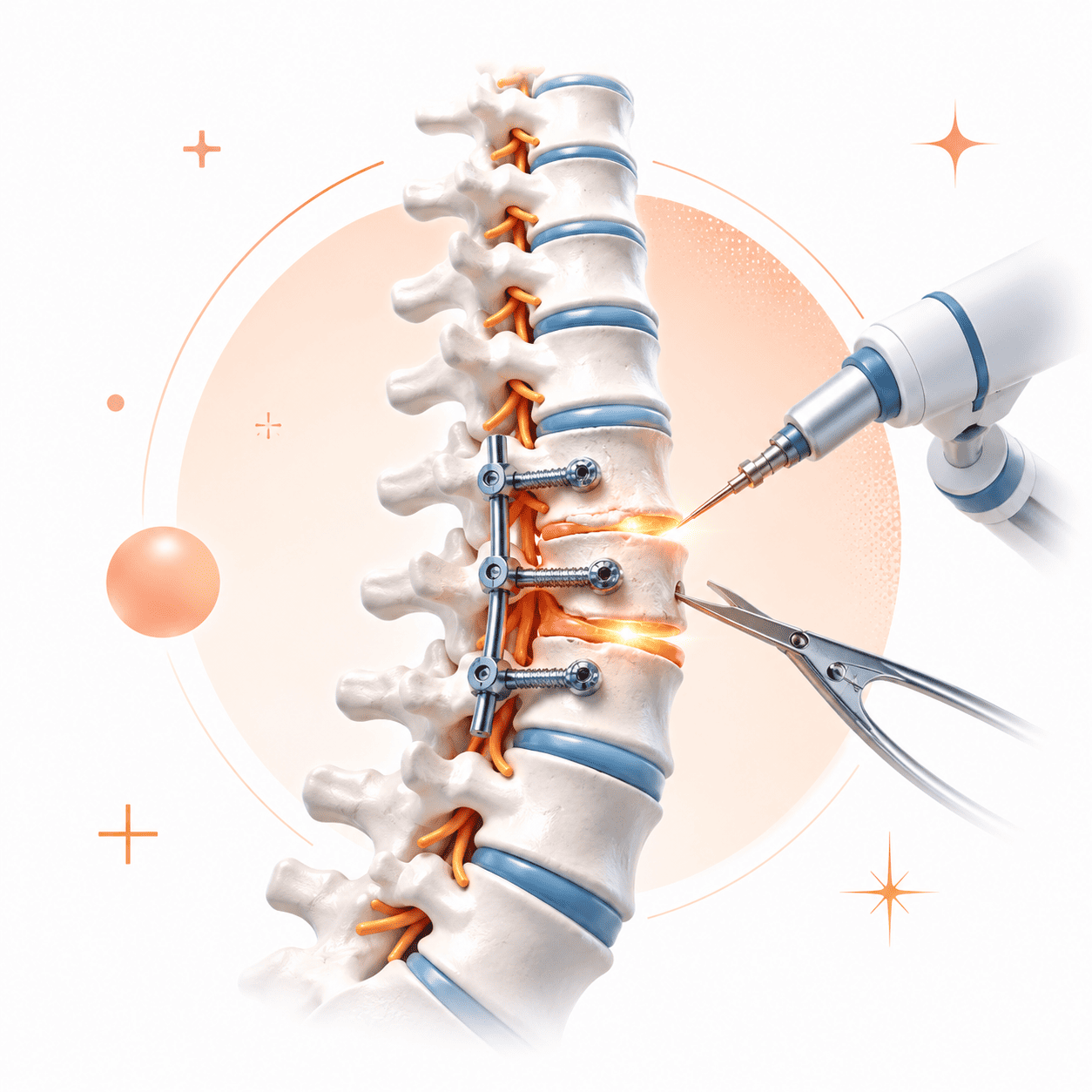
Spine Surgery
Spine surgery treats structural problems affecting the spinal bones, discs, nerves, or spinal cord when conservative treatment is insufficient. Depending on the condition, surgery may relieve nerve compression, stabilize the spine, correct deformity, or remove damaged or abnormal tissue.
Need help in choosing the right package for your medical trip?
Chat to our experts nowYour health data is protected with us
Why Choose us?
Value
Focused care
0+
Neuro / Spine Doctors
1+
Spine Surgery
3+
Hospitals Around the world
100%
Privacy protected
Overview
1. What is Spine Surgery?
Spine surgery refers to a broad range of procedures used to treat conditions affecting the cervical, thoracic, and lumbar spine. The specific operation is selected according to the patient's diagnosis, symptoms, imaging findings, and overall health.
2. When is Spine Surgery recommended?
Surgery may be considered for persistent or severe symptoms caused by conditions such as slipped or herniated discs, spinal stenosis, spinal instability, fractures, spondylolisthesis, deformity, tumours, or certain spinal infections.
3. What are the common types of Spine Surgery?
Common procedures include discectomy, microdiscectomy, laminectomy, decompression, spinal fusion, disc replacement, fracture fixation, tumour surgery, and minimally invasive spine procedures.
4. How is the appropriate procedure selected?
The spine specialist considers the patient's symptoms, neurological examination, MRI or CT findings, spinal alignment, severity of disease, previous treatments, and overall health before recommending a specific surgical approach.
5. Can Spine Surgery be minimally invasive?
Yes. Selected procedures can be performed using minimally invasive techniques through smaller incisions. However, conventional or open surgery may be more appropriate for extensive fusion, deformity correction, tumours, fractures, or other complex conditions.
6. How long does Spine Surgery take?
The duration varies widely depending on the procedure and complexity. A simple decompression may take considerably less time than a multi-level fusion or complex spinal reconstruction. Hospitalization also varies accordingly.
7. What are the benefits?
Depending on the underlying condition, spine surgery may relieve back or neck pain, reduce nerve-related symptoms such as pain or weakness, improve mobility, stabilize an unstable spinal segment, or correct structural abnormalities.
8. What are the risks?
Potential complications include infection, bleeding, blood clots, nerve or spinal cord injury, dural tear and cerebrospinal-fluid leakage, implant problems, failed fusion where applicable, persistent symptoms, and the possibility of further surgery.
9. Why consider Spine Surgery in India?
India has experienced spine and neurosurgical specialists, advanced imaging, navigation and neuromonitoring technologies, modern spinal implants, minimally invasive surgical capabilities, and comparatively affordable treatment costs for international patients.
10. How can Medavelle help?
Medavelle can facilitate preliminary review of MRI/CT scans and medical records, connect patients with an appropriate spine specialist, coordinate the recommended surgical procedure at a suitable hospital, obtain an individualized cost estimate, and assist with travel, accommodation, hospital coordination, and rehabilitation arrangements in India.
Top Neuro / Spine Hospitals
World-class healthcare facilities specializing in Spine Surgery with state-of-the-art technology



Expert Doctors for Spine Surgery
Board-certified specialists with experience in neuro / spine treatment planning
