
Dialysis
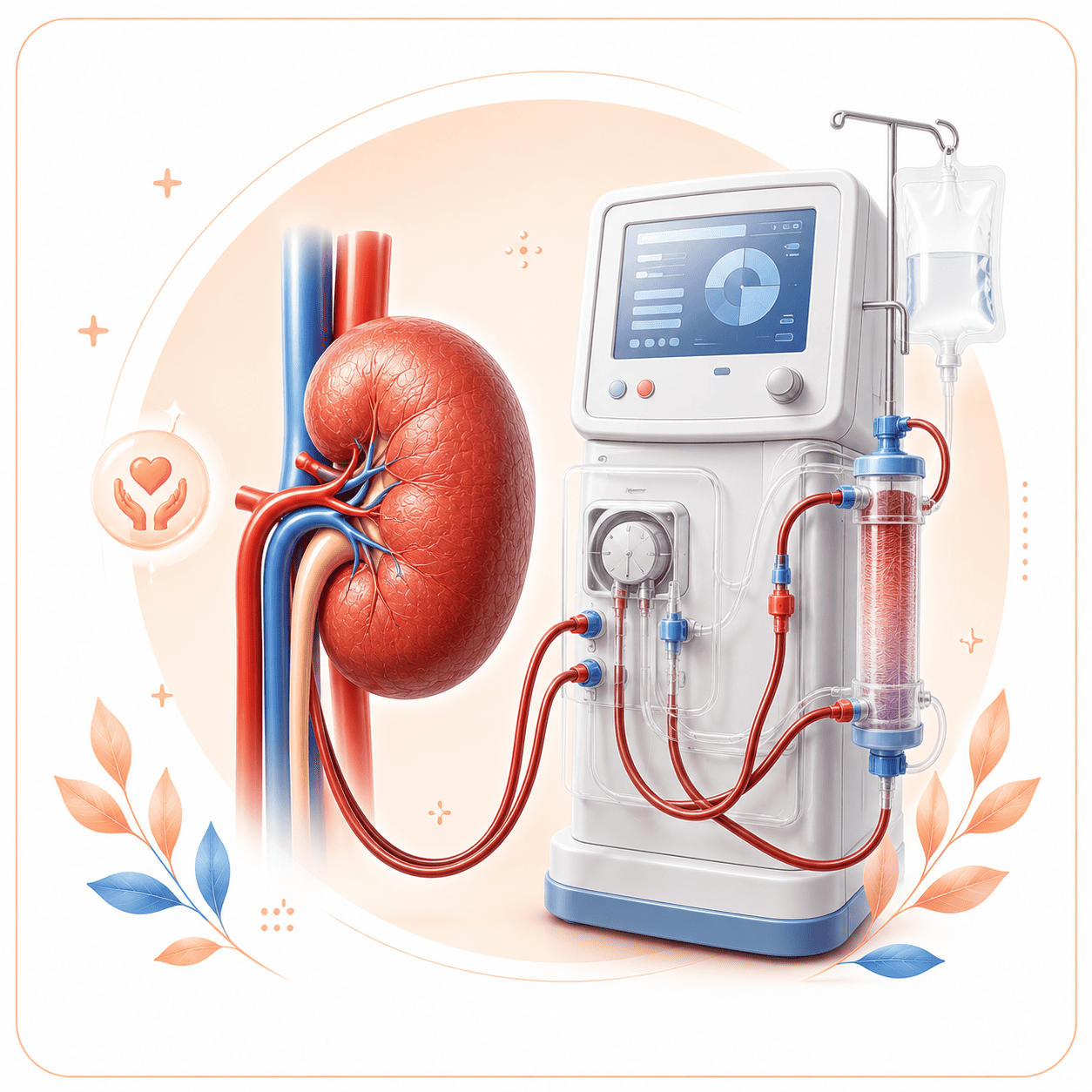
Dialysis is a life-sustaining treatment that removes waste products, excess fluid, and certain electrolytes from the blood when the kidneys cannot function adequately. It can be performed as hemodialysis or peritoneal dialysis, depending on the patient's condition and medical needs.
Need help in choosing the right package for your medical trip?
Chat to our experts nowYour health data is protected with us
Why Choose us?
Value
Focused care
0+
Nephrology & Urology Doctors
1+
Dialysis
3+
Hospitals Around the world
100%
Privacy protected
Overview
1. What is Dialysis?
Dialysis is a treatment that performs some of the functions of the kidneys by removing waste products and excess fluid from the body and helping maintain appropriate electrolyte and acid-base balance.
2. When is Dialysis needed?
Dialysis may be required for advanced kidney failure or, in some situations, severe acute kidney injury. The decision depends on kidney function, symptoms, fluid status, electrolyte abnormalities, and the patient's overall clinical condition.
3. What are the main types of Dialysis?
The two major types are hemodialysis, in which blood is filtered through a dialysis machine, and peritoneal dialysis, which uses the lining of the abdomen as a natural filtering membrane.
4. How is Hemodialysis performed?
Blood is removed from the body through vascular access, passed through a dialyzer that filters waste and excess fluid, and then returned to the patient. Treatment is usually performed several times per week for patients receiving maintenance hemodialysis.
5. What is Peritoneal Dialysis?
A special dialysis solution is introduced into the abdominal cavity through a catheter. Waste products and excess fluid move across the peritoneal membrane into the solution, which is then drained and replaced.
6. What types of vascular access are used for Hemodialysis?
Vascular access may include an arteriovenous fistula, arteriovenous graft, or dialysis catheter. An AV fistula is generally preferred for long-term hemodialysis when suitable.
7. How long does a dialysis session take?
A conventional hemodialysis session commonly lasts around 3–5 hours, although the duration depends on the patient's treatment prescription, kidney function, body size, fluid removal requirements, and clinical condition.
8. What are the possible complications?
Potential complications include low blood pressure, muscle cramps, fatigue, infection, bleeding, vascular-access problems, electrolyte changes, and complications related to the dialysis catheter or fistula.
9. Why consider India for Dialysis?
India has a large network of hospitals and dialysis centres, experienced nephrologists and dialysis teams, modern dialysis equipment, and comparatively affordable treatment costs.
10. How can Medavelle help?
Medavelle can coordinate evaluation with an experienced nephrology team, identify an appropriate dialysis facility, arrange treatment estimates, and assist with hospital, travel, and treatment coordination in India.
Top Nephrology & Urology Hospitals
World-class healthcare facilities specializing in Dialysis with state-of-the-art technology



Expert Doctors for Dialysis
Board-certified specialists with experience in nephrology & urology treatment planning
