AVSD (Atrioventricular Septal Defect)
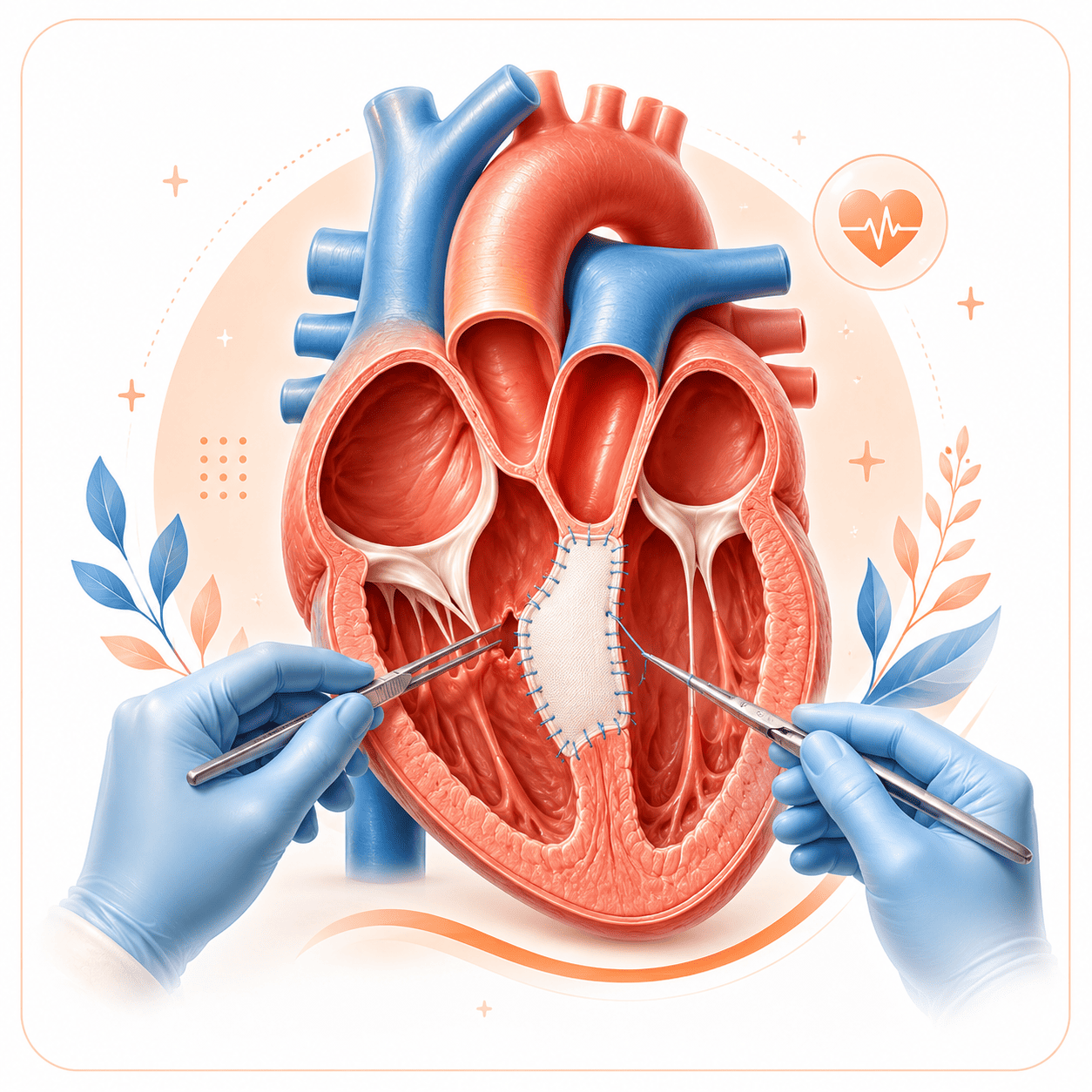
Atrioventricular Septal Defect (AVSD) is a congenital heart condition in which there is a defect in the wall separating the heart chambers along with abnormalities of the valves between the upper and lower chambers. Surgical repair helps restore more normal blood flow through the heart.
Need help in choosing the right package for your medical trip?
Chat to our experts nowYour health data is protected with us
Why Choose us?
Value
Focused care
5+
Cardiology Doctors
1+
AVSD (Atrioventricular Septal Defect)
3+
Hospitals Around the world
100%
Privacy protected
Overview
1. What is Atrioventricular Septal Defect?
An Atrioventricular Septal Defect (AVSD) is a heart defect present from birth involving the wall between the heart chambers and the atrioventricular valves, which control blood flow between the upper and lower chambers.
2. When is it Recommended?
Treatment is generally recommended when the defect is significant and causes excessive blood flow to the lungs, enlargement of the heart, valve leakage or other effects on heart function. The timing depends on the type and severity of the defect.
3. What Symptoms May a Child Show?
Symptoms may include rapid breathing, difficulty feeding, poor weight gain, excessive sweating during feeding, frequent respiratory infections, tiredness and poor growth. Some children may have milder symptoms.
4. What Does the Treatment Involve?
Surgery involves closing the abnormal openings and repairing or reconstructing the atrioventricular valves to establish more normal blood flow through the heart.
5. What Are the Main Treatment Options?
The main treatment is surgical repair. Depending on the child's anatomy, AVSD may be classified as complete, partial or transitional, and the surgical approach is tailored accordingly.
6. How Long Does Treatment & Recovery Take?
Hospitalisation commonly involves several days in intensive care followed by additional recovery in the cardiac unit. The overall hospital stay may be around 1–3 weeks, depending on the child's condition and recovery.
7. What Are the Important Risks or Considerations?
AVSD repair is an established congenital heart procedure, with modern studies reporting high survival rates after repair. Long-term follow-up is important because some children may develop residual valve leakage or other valve-related problems requiring monitoring or further treatment.
8. Why Consider Treatment in India?
India has specialised paediatric cardiac centres with dedicated congenital heart teams, paediatric cardiac surgeons, intensive-care units and diagnostic facilities for complex conditions such as AVSD.
9. How Can Medavelle Help?
Medavelle can assist with medical report review, paediatric cardiologist and cardiac surgeon coordination, hospital selection, treatment planning, international patient arrangements and follow-up coordination.
10. What Should the Patient Do Next?
Share the child's cardiac reports → Paediatric cardiology evaluation → Echocardiography and defect assessment → Treatment recommendation → Treatment planning in India.
Top Cardiology Hospitals
World-class healthcare facilities specializing in AVSD (Atrioventricular Septal Defect) with state-of-the-art technology



Expert Doctors for AVSD (Atrioventricular Septal Defect)
Board-certified specialists with experience in cardiology treatment planning