AICD Insertion
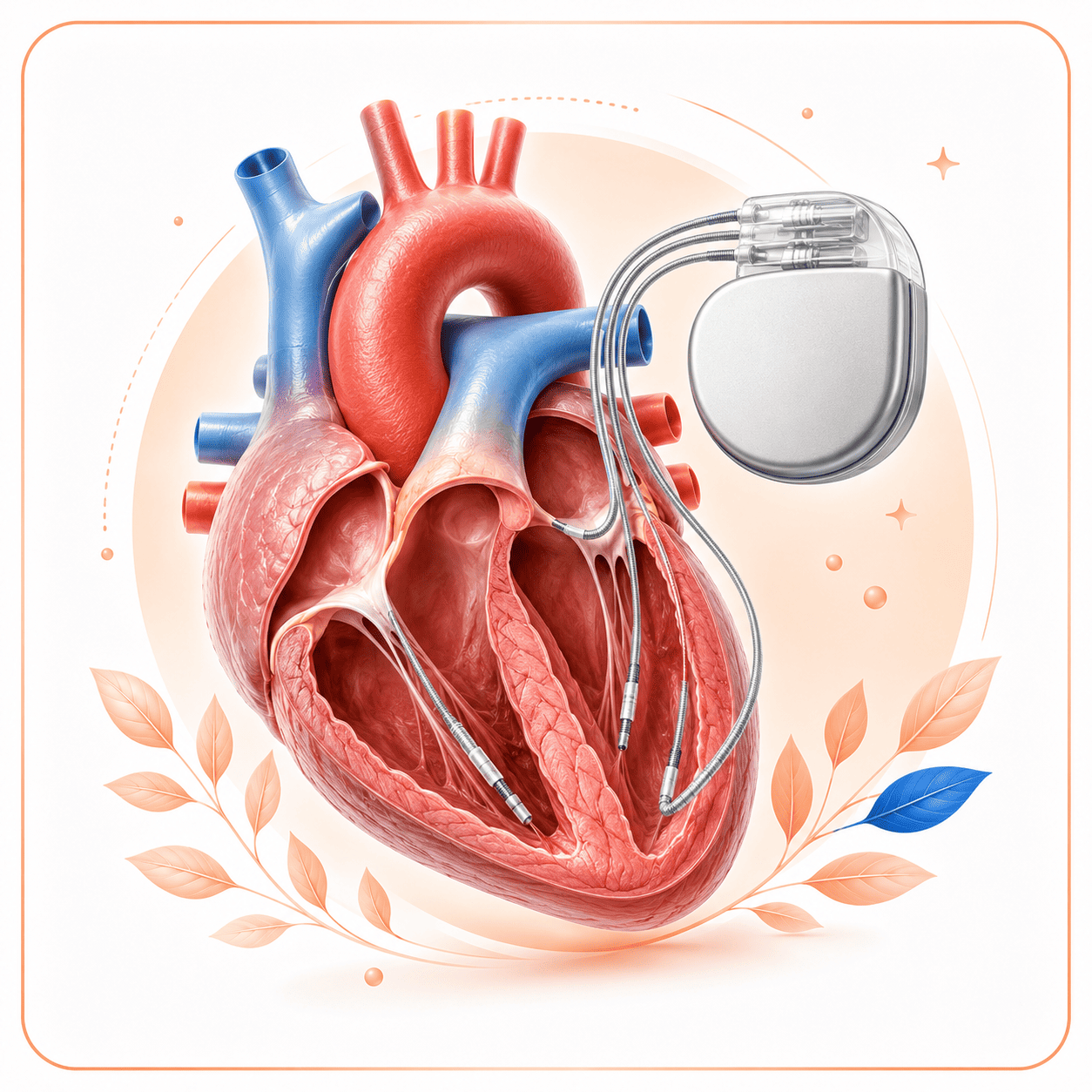
AICD (Automatic Implantable Cardioverter-Defibrillator) insertion is a procedure to implant a device that continuously monitors heart rhythm and can deliver electrical therapy for dangerous ventricular arrhythmias. It can help prevent sudden cardiac death in patients at significant risk of life-threatening abnormal heart rhythms.
Need help in choosing the right package for your medical trip?
Chat to our experts nowYour health data is protected with us
Why Choose us?
Value
Focused care
5+
Cardiology Doctors
1+
AICD Insertion
3+
Hospitals Around the world
100%
Privacy protected
Overview
AICD Insert1. What is an AICD?
An AICD, also called an ICD (Implantable Cardioverter-Defibrillator), is a small electronic device implanted in the body to continuously monitor the heart rhythm and treat certain dangerous arrhythmias.
2. When is AICD insertion recommended?
An AICD may be recommended for patients who have survived certain life-threatening ventricular arrhythmias or who are considered at high risk of sudden cardiac death because of specific heart conditions.
3. How does an AICD work?
The device continuously monitors the heart's electrical activity. If it detects a dangerous rhythm such as ventricular tachycardia or ventricular fibrillation, it can deliver electrical therapy to restore a safer heart rhythm.
4. What are the different types of AICD systems?
Most ICDs are transvenous systems with leads placed through veins into the heart. Selected patients may be suitable for a subcutaneous ICD, which places the sensing and shock system under the skin without placing leads inside the heart.
5. What tests are performed before implantation?
Evaluation may include ECG, echocardiography, Holter or other rhythm monitoring, blood tests, and assessment of the underlying heart condition. Additional cardiac testing may be required to determine whether an ICD is appropriate.
6. How is an AICD implanted?
Usually under local anesthesia with sedation, the device is placed beneath the skin, commonly below the collarbone. For a transvenous ICD, leads are guided through a vein into the appropriate heart chambers and connected to the device.
7. How long does AICD insertion take and what is recovery like?
The procedure commonly takes a few hours or less, depending on the system and complexity. Many patients can return home relatively soon after implantation, with restrictions on strenuous activity involving the implantation site during early healing.
8. What are the potential risks?
Possible complications include bleeding or bruising, infection, lead displacement or malfunction, blood-vessel injury, pneumothorax, inappropriate shocks, and rarely serious cardiac complications. Regular device follow-up is important.
9. Why consider India for AICD insertion?
India has experienced electrophysiologists and cardiologists, advanced cardiac centers, modern device-implantation facilities, and access to major international ICD brands at comparatively competitive treatment costs.
10. How can Medavelle help?
Medavelle can coordinate medical-record and cardiac-test review, connect patients with appropriate cardiologists or electrophysiologists and hospitals, assist with treatment coordination, and support international patients with non-clinical arrangements.ion
Top Cardiology Hospitals
World-class healthcare facilities specializing in AICD Insertion with state-of-the-art technology



Expert Doctors for AICD Insertion
Board-certified specialists with experience in cardiology treatment planning