Abdominal Aortic Aneurysm (AAA)
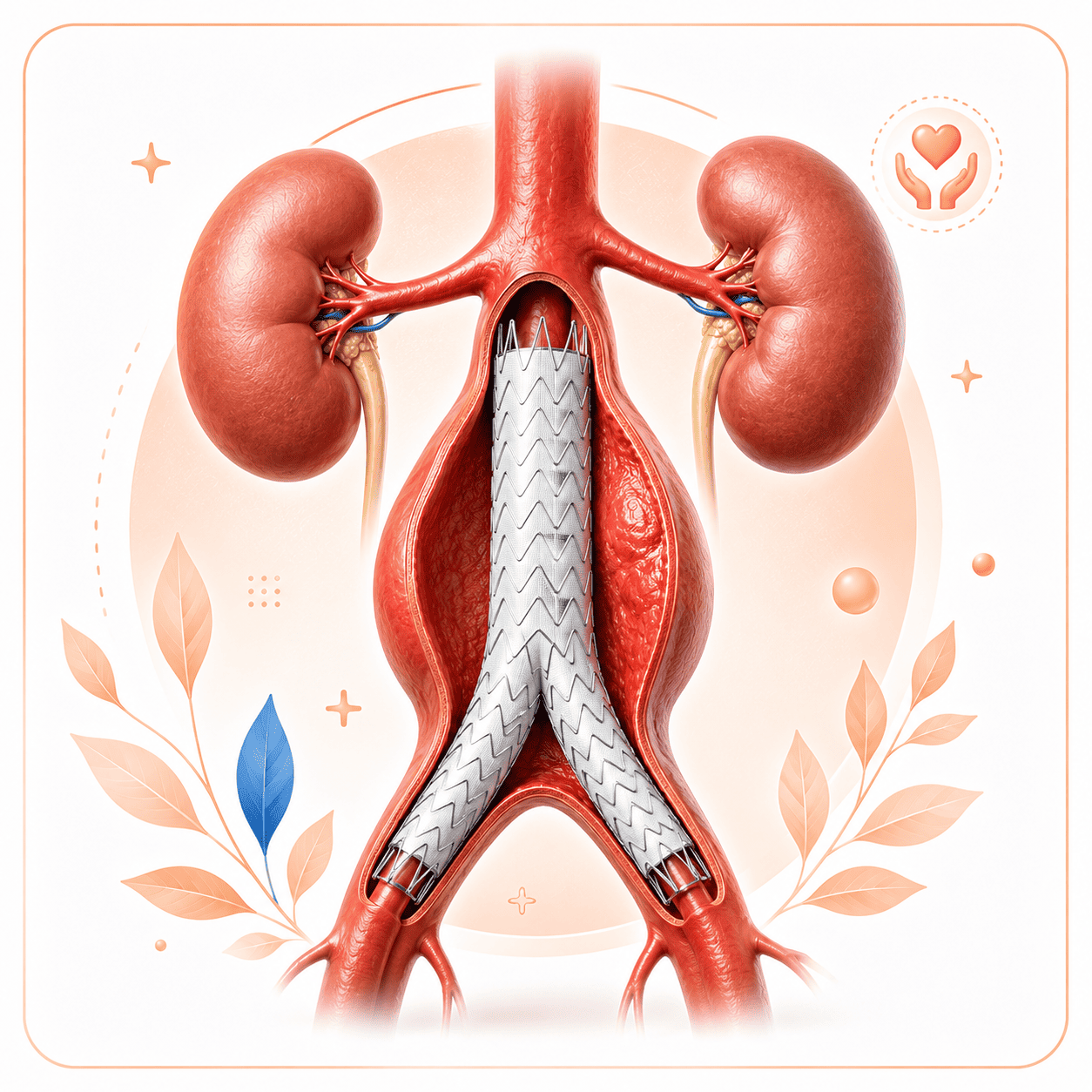
An Abdominal Aortic Aneurysm (AAA) occurs when a weakened section of the aorta—the body's main blood vessel—becomes enlarged or bulges. Depending on its size, growth and risk of rupture, treatment may involve monitoring, endovascular repair (EVAR) or open surgery.
Need help in choosing the right package for your medical trip?
Chat to our experts nowYour health data is protected with us
Why Choose us?
Value
Focused care
5+
Cardiology Doctors
1+
Abdominal Aortic Aneurysm (AAA)
3+
Hospitals Around the world
100%
Privacy protected
Overview
1. What is Abdominal Aortic Aneurysm (AAA)?
The aorta is the body's main blood vessel, carrying blood from the heart to the rest of the body. An AAA occurs when a weakened section of the aorta in the abdomen becomes enlarged or bulges.
2. When is Treatment Recommended?
Treatment may be recommended when an aneurysm becomes large, grows rapidly, causes symptoms, or has a significant risk of rupture. Important risk factors include smoking, high blood pressure, increasing age, family history and hardening of the arteries (atherosclerosis).
3. What Symptoms May a Patient Notice?
Many AAAs cause no symptoms. When symptoms occur, they may include persistent abdominal or back pain, a pulsing sensation in the abdomen, or pain extending towards the back or side. Sudden severe abdominal or back pain may indicate rupture and requires emergency medical attention.
4. What Does the Treatment Involve?
Treatment depends on the aneurysm's size, location, anatomy and risk. It may involve regular monitoring, medical management, endovascular repair or open surgical repair.
5. What Are the Main Treatment Options?
The two main repair options are Endovascular Aneurysm Repair (EVAR), where a stent-graft is placed inside the aorta through blood vessels, and open surgical repair, where the weakened section is repaired surgically.
6. How Long Does Treatment & Recovery Take?
Hospital stay varies with the procedure and patient's condition. Recent clinical data report a median stay of around 5 days after EVAR and 9 days after open repair in elective AAA patients. Recovery after EVAR is generally more gradual than hospitalisation alone suggests, while open surgery usually requires a longer recovery period.
7. What Are the Important Risks or Considerations?
AAA repair is an established treatment with strong short-term outcomes. A large meta-analysis reported approximately 98.8% 30-day survival after EVAR in elective cases, with long-term survival broadly similar between EVAR and open repair. EVAR requires regular imaging follow-up to monitor the stent-graft.
8. Why Consider Treatment in India?
India has developed significant expertise in complex vascular and aortic procedures, with specialised centres offering both EVAR and open aortic repair. For international patients, this provides access to experienced vascular teams and advanced endovascular facilities.
9. How Can Medavelle Help?
Medavelle can assist with medical report review, vascular specialist and hospital coordination, treatment planning, international patient arrangements and follow-up coordination.
10. What Should the Patient Do Next?
Share your medical reports → Specialist evaluation → Aneurysm assessment → Treatment recommendation → Treatment planning in India.
Top Cardiology Hospitals
World-class healthcare facilities specializing in Abdominal Aortic Aneurysm (AAA) with state-of-the-art technology



Expert Doctors for Abdominal Aortic Aneurysm (AAA)
Board-certified specialists with experience in cardiology treatment planning